Artificial intelligence went from a curiosity to a daily fact of life faster than almost any technology before it. For library workers, that creates an awkward gap: patrons are asking about AI, and many of us are still finding our own footing.
So we made something to help — and made it free.
Two series, eleven lessons
Our video curriculum lives on YouTube and is organized into two series.
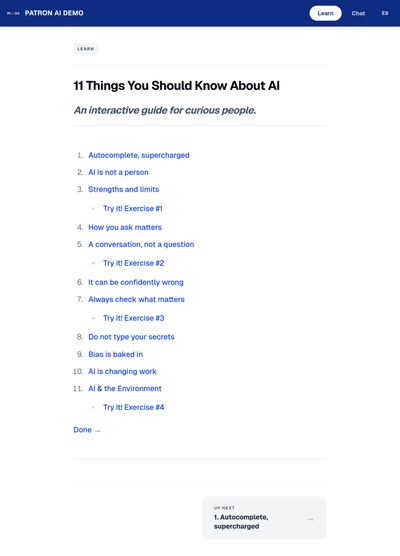
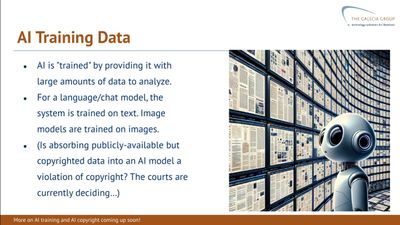
Series 1 — How AI Works (for non-techies) is a gentle, three-lesson overview of modern AI: what it is, what it isn't, and how it's used. It covers what AI actually does, how a large language model is trained from data, and how people are putting AI to work at home, at work, and in libraries.
Series 2 — Risks and Limitations of AI is an eight-part series on the harder questions: the "black box" problem, why AI systems make things up, privacy and security, copyright, the cost-and-access divide, bias and fairness, job displacement, and AI's environmental footprint.
video series
plain-language lessons
free on YouTube
Built for the library context
Every video is written in plain language — no math, no jargon, and no assumption that you arrived already knowing the vocabulary. The examples are the ones your patrons will recognize: chatbots, image generators, search results, job applications.
That is deliberate. The same qualities that make these videos work for library staff make them safe to share with patrons.
How to use them
- Watch them yourself to build confidence before the next patron question.
- Share individual lessons — link "Privacy and Security Basics" or "Bias and Fairness in AI" when a specific question comes up.
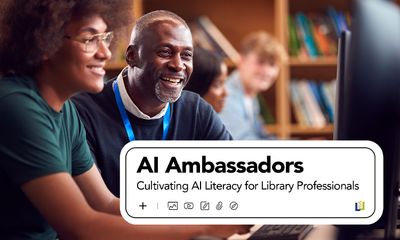
- Drop them into a class or display as a ready-made starting point for an AI literacy program.
Browse the full set, with descriptions and runtimes, on the Videos page. And if you want this kind of content custom-built for your library system, that is exactly what our training and consulting work is for.